 Garage Door Repair Ocala
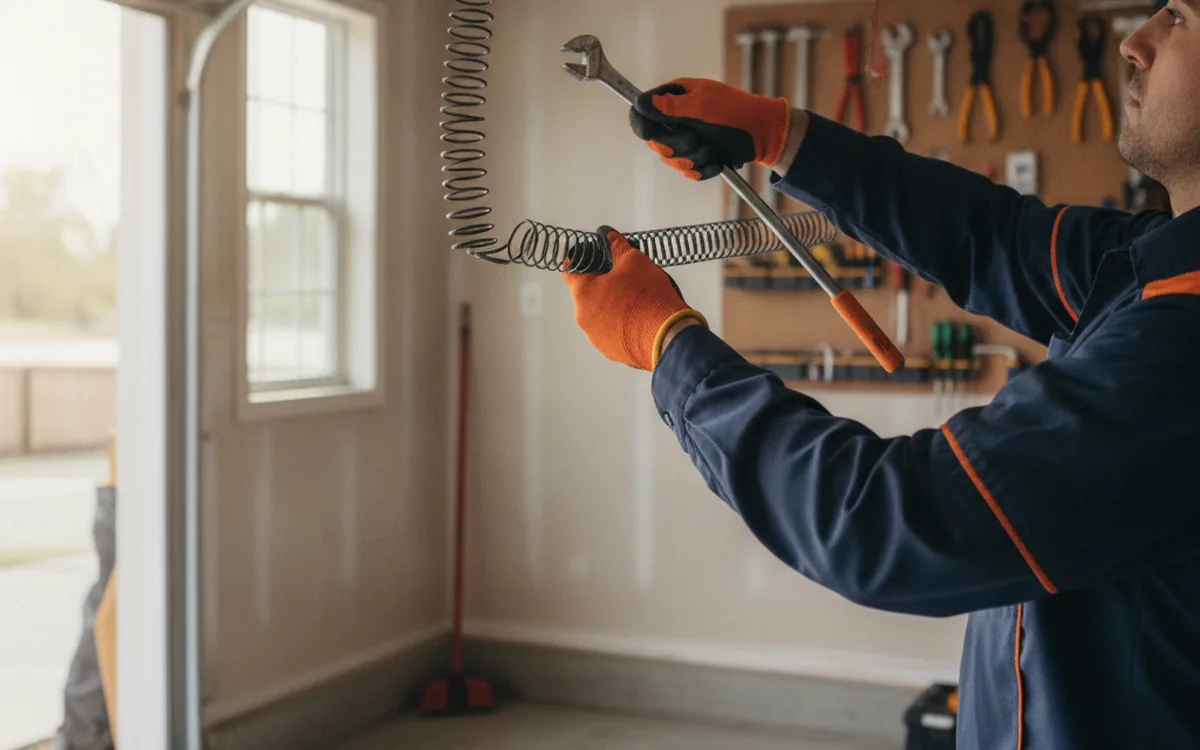
A garage door that suddenly won’t budge — or slams down hard and fast — almost always means a broken spring. It’s the single most common call we get across Marion County, and it’s not a DIY fix: torsion springs are under enormous tension and have injured plenty of confident homeowners. Our licensed, insured technicians replace them safely, usually the same day you call.
Springs don’t last forever. Most are rated for 10,000-15,000 open-close cycles — roughly 7-12 years of normal use — and Florida’s heat and humidity tend to shorten that lifespan compared to drier climates. When one goes, the other is usually close behind, which is why we typically recommend replacing both at once rather than waiting for the second failure.
What’s Included
Every spring repair starts with identifying the system: torsion springs mounted above the door versus extension springs running along the horizontal tracks call for different tools and different safety procedures. From there, a technician inspects the cables, drums, and end bearings for wear — a spring failure often stresses these components too, and replacing a spring while ignoring a frayed cable just sets up the next emergency call. Once the new spring (or pair) is installed, we run a full balance test, lifting the door manually to confirm it holds position without the opener fighting it.
Signs You Need Spring Repair
- A visible gap in the coil, or the spring hanging loose and separated
- A loud bang from the garage — that’s usually the spring snapping, not the door itself
- The door feels noticeably heavier than usual when lifted by hand
- The opener strains, grinds, or stalls partway through opening
- The door opens a few inches and reverses, or won’t lift past halfway
- Visible rust or stretching on the coils, especially on older, humidity-exposed systems
Our Process
1. Diagnosis on arrival. A technician identifies the spring type, checks cables and hardware, and confirms whether one or both springs need replacing.
2. Fixed quote before any work. You get an exact price for parts and labor — no guessing, no surprise line items on the invoice.
3. Same-visit replacement. Most spring jobs are done in under an hour, finishing with a full balance and safety test before the technician leaves.
Pricing
Spring repair typically runs $150-$350 for a single spring, or $280-$500 to replace both — the exact number depends on spring size, door weight, and whether cables or drums also need attention. That’s on the lower end of our overall Marion County repair range of $424-$1,917, and you’ll have the number confirmed before we start.
Torsion vs. Extension Springs — Why It Matters
Most homeowners don’t know which type of spring their door uses until something breaks, but the distinction actually changes the repair. Torsion springs mount horizontally on a metal shaft directly above the door opening and twist to store energy — they’re the standard on most homes built or renovated in the last couple of decades, since they last longer and operate more smoothly than the alternative. Extension springs run along the horizontal tracks on either side of the door and stretch rather than twist; they’re common on older installations and tend to wear out faster, especially in humid climates like Florida’s. If your door is running extension springs and needs a replacement anyway, we’ll flag whether an upgrade to a torsion system makes sense for your specific door — it’s not always worth the extra cost, but it’s worth knowing the option exists.
How Long Should a New Spring Actually Last?
Springs are rated in cycles, not years, which is why two houses of the same age can have very different spring lifespans depending on how often the door gets used. A standard residential spring is typically rated for 10,000 cycles — one cycle being a full open-and-close — which works out to roughly 7-12 years for an average household opening the door 3-5 times a day. Heavier use (multiple vehicles, frequent access, a door used as a secondary entrance) shortens that window considerably. When we install a new spring, we size it correctly for your specific door’s weight rather than defaulting to a generic size, since an undersized spring wears out faster and an oversized one puts unnecessary strain on the opener.
What Happens If You Wait Too Long
A spring showing early warning signs — a visible gap in the coil, a door that’s started feeling heavier — doesn’t always fail immediately, which tempts some homeowners to put off the repair. The risk isn’t just inconvenience: a fully broken spring means the door has no counterbalance at all, and forcing it open manually or via the opener can damage the track, the opener motor, or the cables in addition to the spring itself. What would have been a straightforward single-component repair can turn into a multi-part fix once other hardware gets stressed by a door operating without proper spring support.
Spring Repair FAQ
Is it dangerous to try replacing a spring myself?+
Yes. Torsion springs store enough tension to cause serious injury if released improperly. It’s one of the few garage door repairs we never recommend as DIY.
Should I replace one spring or both?+
If your door has two springs and one has broken, we generally recommend replacing both — they wear at a similar rate, and the second is usually close to failing too.
How long does a spring repair actually take?+
Most spring replacements are completed in 45-60 minutes once the technician arrives, including the final balance test.
Can a broken spring damage anything else on my door?+
It can — a snapped spring puts sudden strain on cables and the opener if the door is operated before repair. That’s why we recommend not using the door until a technician can look at it.
If your door won’t budge at all, our emergency same-day repair covers spring failures too. See our full Marion County service area for coverage details, including Ocala, Belleview, and Dunnellon.