 Garage Door Repair Ocala
 How Ocala’s Heat and Humidity Affect Your Garage Door
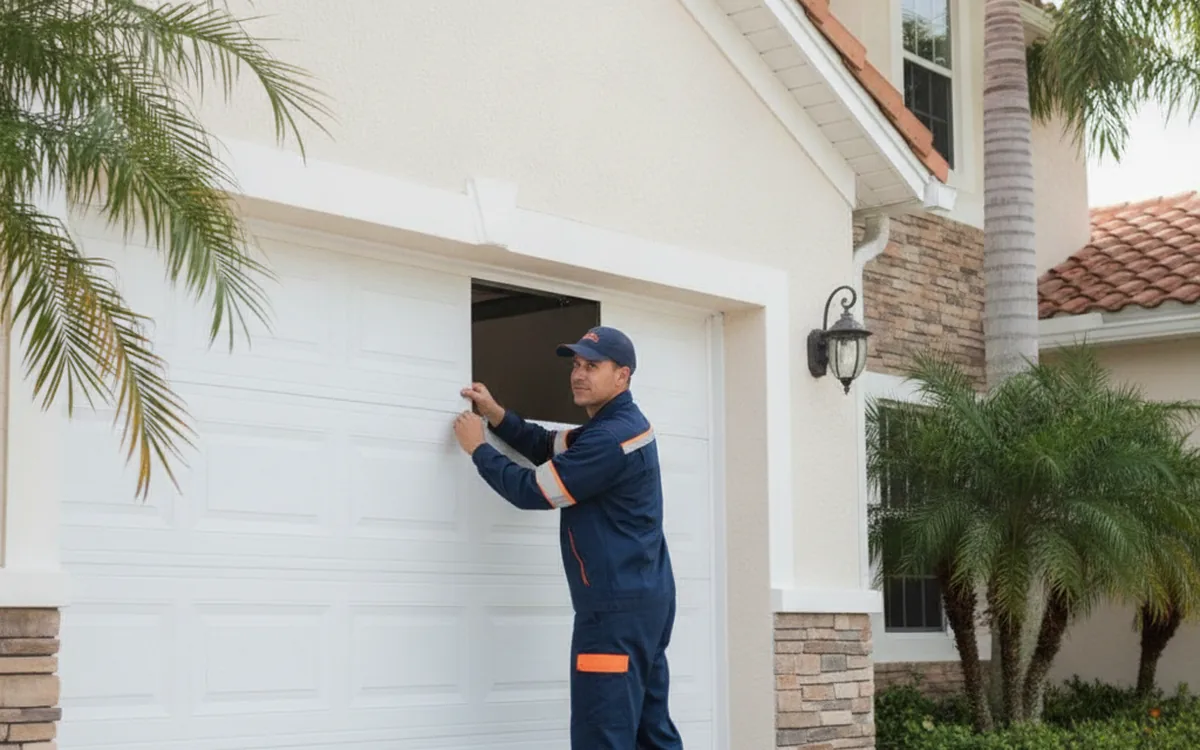
If you’ve lived in Ocala for more than a summer, you already know Florida weather doesn’t do anything halfway. Ninety-plus degree afternoons, humidity that never really drops even at night, and a rainy season that can dump an inch of water in twenty minutes — all of it happening directly on top of a garage door that, for most homes, is the single largest moving mechanical assembly in the house.
Garage doors built and installed in Ohio or Colorado deal with cold and dry air. Doors here deal with something different, and it shows up as specific, predictable wear patterns if you know what to look for.
Heat Expansion and Track Alignment
Metal expands in heat and contracts in cooler nights, and Ocala’s daily temperature swings mean your door’s track and hardware are doing tiny expansion-contraction cycles constantly through the warmer months. Over years, this contributes to bracket loosening and slight track misalignment that wouldn’t happen nearly as fast in a milder climate. It’s one reason we recommend a hardware check specifically before and after the peak of summer.
Humidity, Rust, and Corrosion
This is the big one. Marion County’s humidity sits high for most of the year, and any exposed steel — spring coils, cables, hinges, track bolts — is in a slow but constant fight against rust. Coastal-adjacent parts of Florida see this even faster, but inland Ocala isn’t spared either, especially for older homes near downtown where original hardware has had 15-plus years to accumulate corrosion. Rust doesn’t just look bad; it weakens metal from the inside, which is part of why a cable or spring that “looks okay” can still be closer to failure than a quick glance suggests.
UV Damage to Seals and Finishes
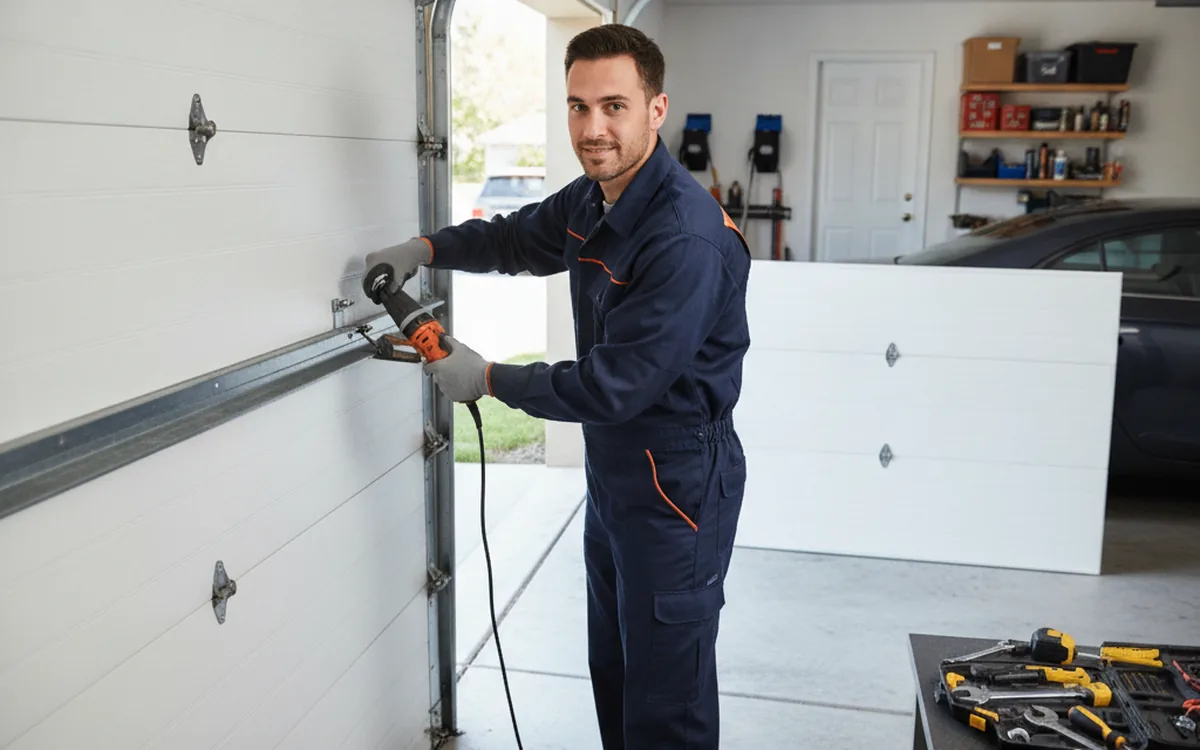
Florida sun is brutal on rubber and vinyl. The weatherstripping around your door — the bottom seal especially — breaks down and cracks from UV exposure faster here than almost anywhere else in the country. Once that seal fails, you get water intrusion during storms, easier entry for insects and small pests, and a less efficient seal on any attached garage you’re trying to keep cool.
Heat Load on Attached Garages
An uninsulated garage door with direct summer sun exposure can turn an attached garage into one of the hottest spaces in the house, which then makes any room next to or above it harder to keep comfortable and drives up cooling costs. This is exactly why garage door insulation tends to pay for itself faster here than in cooler states — the temperature differential it’s fighting against is simply bigger.
Storm Season Stress
Beyond the everyday wear, Florida’s storm season puts sudden stress on doors that milder climates never test for — wind pressure against a large door surface, debris impacts causing dents, and rapid pressure changes that can affect a door’s structural integrity if it isn’t rated or reinforced properly for the load.
What This Means for Maintenance in Ocala
None of this means your garage door is destined to fail — it means the maintenance schedule that works in a mild climate isn’t quite enough here. We generally recommend Ocala homeowners get a full tune-up at least once a year, twice for doors that see heavy daily use or sit in direct afternoon sun, with particular attention to lubrication (humidity dries out standard lubricants faster), weatherstripping condition, and hardware corrosion. Catching rust or a UV-cracked seal early is a small, affordable fix. Catching it late, after a cable has actually frayed through, is a same-day emergency call instead.
If it’s been over a year since your door had a real inspection, Florida’s climate has probably been working on it more than you’d guess just from looking at it.
Does Ocala Have It Easier Than Coastal Florida?
Being inland does spare Ocala from the salt-air corrosion that hammers garage door hardware in coastal cities like Tampa or Jacksonville — salt spray is genuinely harsher on exposed steel than humidity alone, so inland homeowners aren’t dealing with quite the worst-case scenario. That said, “easier” is relative. Marion County’s humidity levels still run high most of the year, rainfall is heavy and frequent during summer months, and UV intensity here is essentially the same as anywhere else in peninsular Florida. So while an Ocala homeowner’s door might outlast an identical door in Cocoa Beach by a few years on the corrosion side, it’s still working through a climate that’s meaningfully harder on hardware than a typical door in Georgia, the Carolinas, or further north.
The practical takeaway is that Ocala homeowners shouldn’t assume “not coastal” means “not affected.” The maintenance schedule that makes sense here is closer to a coastal Florida schedule than a national-average one, even if the failure timelines run a little longer.
One more inland-specific factor worth mentioning: Ocala’s proximity to the Ocala National Forest and surrounding agricultural land means more airborne dust and pollen than a typical urban Florida setting, which adds its own wear pattern on top of the humidity — dust mixing with lubricant on tracks and rollers can create a gritty buildup that accelerates mechanical wear if it’s not cleaned out periodically during routine maintenance.
Frequently Asked Questions
Does Florida’s climate really wear out garage doors faster than other states?
Yes, particularly the humidity’s effect on metal corrosion and UV exposure’s effect on rubber seals — both accelerate wear beyond what’s typical in drier, milder climates.
How often should I lubricate my garage door in Ocala?
More often than manufacturer guides written for a national audience suggest — every 3-4 months is a reasonable baseline given local humidity drying out standard lubricants faster.
Is garage door insulation worth it in Florida?
For an attached garage with direct sun exposure, yes — it noticeably reduces heat transfer into the garage and any adjacent living space, which can meaningfully cut summer cooling costs.
Related Garage Door Services in Ocala, FL
Garage Door Weatherstripping Replacement
Garage Door Insulation Installation